
Cold Weather is Coming: How to Prevent and Control H9 Subtype Avian Influenza?
Publish time:2025-01-21 Author:Cold Weather is Coming: How to Prevent and Control H9 Subtype Avian Influenza? Column:Tech Features
As temperatures gradually drop and winter approaches, the incidence of respiratory diseases in poultry begins to rise. Avian influenza, as the number one infectious disease in poultry farming, has always been a significant concern, and the H9 subtype is one of the most prominent among low pathogenic avian influenza strains. Although the H9 subtype is less pathogenic on its own and presents with mild clinical symptoms, it can cause upper respiratory tract infections and damage the reproductive system in poultry, leading to stunted growth in broilers and reduced egg production in layers. Moreover, co-infections with other pathogens—such as IB, MS, CIAV, and IBDV—often exacerbate clinical symptoms. Additionally, the H9 subtype can act as an internal gene donor for avian influenza viruses, promoting the emergence of novel recombinant strains. This may alter the virus's pathogenicity, leading to new disease outbreaks and greater economic losses.
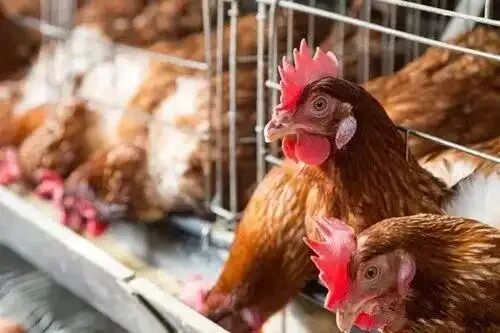
1. Major Hosts
Broilers show the highest detection rate, followed by layers and yellow-feather broilers.
(Data source: Tianjin Bohai Agriculture & Animal Husbandry)
2. Epidemiological Situation
The currently circulating H9 subtype primarily belongs to the Eurasian lineage, branch 4.2.5, which can be further divided into sub-branches a/b/c Trends over the past three years are as follows:
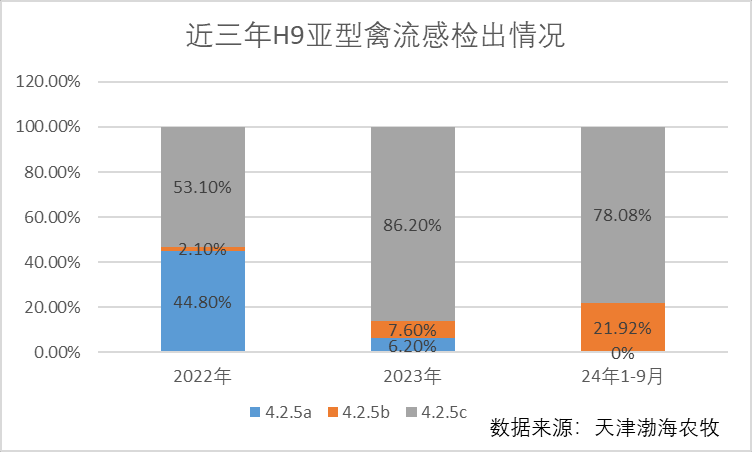
Detection Status of H9 Subtype Avian Influenza in the Past Three Years
(1) Sub-branch a has not been detected in the first three quarters of 2024.
(2) Sub-branch b shows an increasing detection rate and expanding geographic distribution.
(3) Sub-branch c remains the dominant genetic branch and has been detected across all regions of the country.
3. Prevention and Control Measures
(1) Strengthen Biosecurity
- Establish a strict and comprehensive biosecurity system.
- Implement an all-in/all-out management approach.
- Enforce rigorous disinfection and isolation protocols across all zones of the farming facility.
- Conduct bird repellency measures and avoid mixed rearing of waterfowl and land-based poultry.
(2) Improve Feeding Management
- Optimize ventilation in poultry houses to ensure a healthy growing environment.
- Provide precise and balanced feed nutrition to build a solid foundation for poultry health.
(3) Select Matching Vaccines
- Choose vaccines that match locally circulating strains.
- Validate vaccine suitability and protective efficacy through serum cross-reaction tests and challenge protection trials.
(4) Develop a Scientific Vaccination Program
- Tailor immunization schedules according to poultry type and rearing cycle.
- Broilers: recommend 1–2 vaccinations.
- Layers/Breeders: recommend 3–4 vaccinations before laying begins, with booster shots during the laying period based on antibody titers.